
Corporate AI training · Hyderabad · for HR, L&D and leadership
Corporate AI Training in Hyderabad, Rolled Out Department by Department
Organisations whose people have trained with Skillopedia
At a glance
The programme in one table
| Question | Answer |
|---|---|
| What is it? | Company-wide AI training for Hyderabad organisations, planned department by department |
| Which tools? | Microsoft Copilot, ChatGPT, Gemini and Claude, alone or side by side |
| Who attends? | Leaders first, then each department in cohorts of 15 to 30, plus one or two champions per team |
| How long? | A 2 to 3 hour leadership briefing and one-day cohorts; a full rollout runs 6 to 12 weeks |
| Where? | On-site in HITEC City, Gachibowli, the Financial District, Genome Valley and elsewhere, or online in IST |
| What does the sponsor get? | One AI-use rule, champions, and re-timed tasks and usage at 30, 60 and 90 days |
| Pricing | A fixed, itemised fee in INR after a scoping call |
The problem buyers describe
Licences bought, usage flat: why company-wide AI stalls
Most Hyderabad organisations we speak to already pay for at least one assistant. The pattern after purchase is familiar, and none of it is fixed by another webinar.
- One generic session for everyone. An analyst, a recruiter and a plant QA officer sit through the same demo, and none of them sees their own work.
- Unclear rules. People are unsure what they may paste, so the cautious ones stop and the careless ones carry on.
- Tools taught in isolation. Copilot users get a Copilot class, Claude users a Claude class, and nobody explains which tool is meant for which job.
- No owner after training. Without champions, prompts and templates live in personal chats and leave with the person.
- No baseline. Six months on, the sponsor has licence costs but no evidence either way.
A corporate programme is designed around these five failure points.
Tool-agnostic by design
We train the assistants your company actually licenses
Large Hyderabad employers rarely run a single tool. A GCC may have Microsoft 365 Copilot for managers, ChatGPT Business for an analytics team and Claude for engineers. Here is what each vendor’s own documentation says about the plans companies typically buy, and what we focus on in training.
| Assistant | What employees get (vendor documentation) | Point for your AI-use rule | What we teach |
|---|---|---|---|
| Microsoft Copilot | Copilot Chat is included with eligible Microsoft 365 licences and is mainly web-grounded; a Microsoft 365 Copilot licence adds grounding across mail, files and meetings | Copilot respects existing Microsoft 365 permissions, so file access hygiene matters | Outlook, Teams, Word and Excel tasks; when to use Chat versus the licensed experience |
| ChatGPT Business or Enterprise | A shared workspace with ChatGPT, ChatGPT Work and Codex, including Projects, company knowledge and deep research | OpenAI states it does not train on Business workspace data | Projects for team work, ChatGPT Work for longer tasks, safe sharing and which integrations to allow |
| Gemini for Google Workspace | Gemini inside Gmail, Docs, Drive and Meet, the Gemini app and Gemini Notebook, formerly NotebookLM | Google states content is not used to train models outside your domain without permission | Drafting in Docs and Gmail, summaries of Drive files, source-based research in Gemini Notebook |
| Claude Team or Enterprise | Projects, artifacts, Skills, connectors, Cowork for multi-step file work and Claude Code for engineers | Anthropic states commercial inputs and outputs are not used for training by default | Long-document work, shared Skills, Cowork for analysts, Claude Code for developers |
Checked against Microsoft Learn, the OpenAI Help Center, the Google Workspace Privacy Hub and Anthropic’s privacy centre on 22 October 2026. Plans and features change; we confirm yours with your IT team before the first cohort.
How a rollout runs
From a readiness check to the whole Hyderabad site
A typical programme for a site of several hundred people. Smaller organisations compress it; multi-campus groups run several departments in parallel.
Department tracks
Each function practises on its own work, in its own cohort
Cohorts are split by role, not by seniority alone. Each track links to our dedicated programme for that function.
Finance and accounts
Month-end commentary, audit query replies, invoice exception notes and board-pack summaries. AI for finance
HR and talent
Job descriptions with bias checks, policy FAQs, onboarding plans and engagement-survey themes. AI for HR
Quality and regulatory
For pharma and manufacturing: SOP drafting support, deviation narratives and training-record updates. AI for manufacturing
Presales and client delivery
RFP analysis, proposal sections, weekly status reports and client updates for IT services teams. AI for IT and engineering
Operations and service
Case summaries, customer replies with masked data, process documentation and handover notes. AI for operations
Leadership
Where AI changes cost, risk and customer experience, what to fund first and how to read the 90-day report. AI for CXOs
Worked examples
Four Hyderabad organisations, four different tools
Composite examples showing how one programme adapts to whichever assistant a department uses. They describe method, not results from a named client.
Copilot · A Financial District GCC’s business review
A capability centre’s operations managers prepare a monthly business review for their parent company from Teams meetings, an Excel tracker and email threads.
- Managers ask Microsoft 365 Copilot in Teams for a recap of the month’s review meetings, with decisions and open actions.
- In Excel, Copilot summarises the tracker by workstream and highlights items past their due date.
- In Word, Copilot drafts the review narrative from both sources, which the manager edits.
Gemini · Regulatory affairs in a Genome Valley firm
A life-sciences company on Google Workspace receives queries from health authorities and must plan a response within a deadline.
- The query letter and relevant internal documents, already in Drive, are opened in Gemini Notebook.
- Gemini lists each question, the documents that address it and the gaps.
- In Docs, Gemini drafts a response plan with owners and dates.
ChatGPT · Hiring kits in a Madhapur IT firm
A fast-growing IT services company’s talent team writes job descriptions and interview kits for dozens of roles each quarter.
- A ChatGPT Business project holds the competency framework, the house JD template and inclusive-language guidance.
- ChatGPT drafts the JD and a structured interview kit for each new role.
- A second prompt checks the draft for biased or exclusionary wording.

Claude · Complaint replies in a BFSI service centre
A bank’s customer-service centre handles written complaints that must be classified and answered in an approved tone and timeframe.
- A Claude Project holds the complaint categories, approved reply templates and escalation rules.
- Synthetic complaint letters, with no real customer data, are classified by category and urgency.
- Claude drafts a reply for each in the approved template and lists anything that needs escalation.
Governance
One AI-use rule that covers every tool
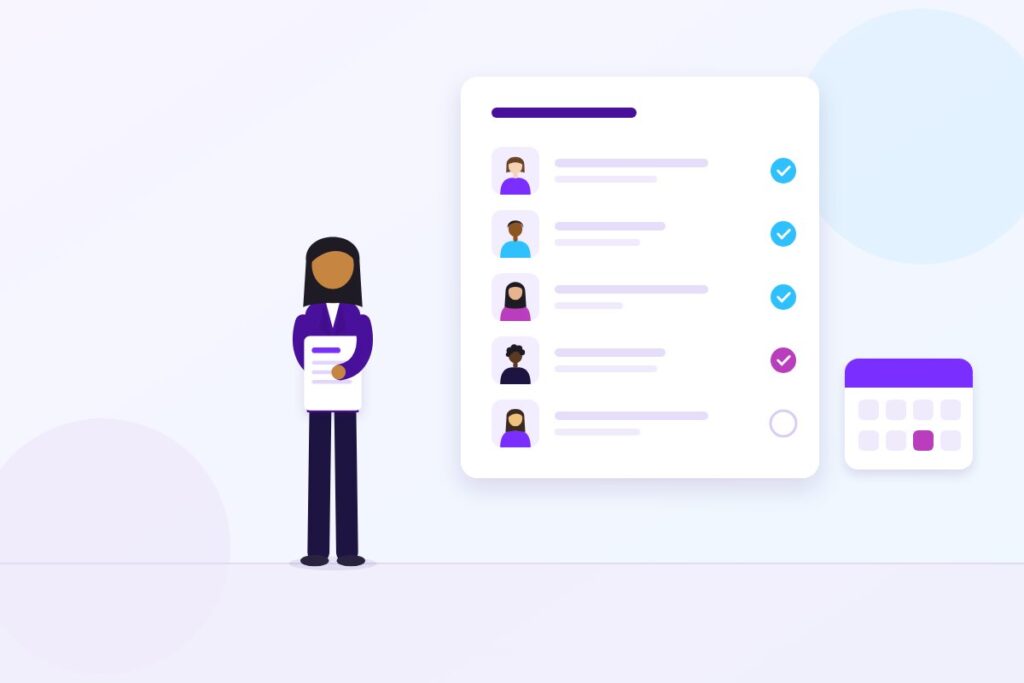
Employees should not need four policies for four assistants. We help your legal, IT, HR and information security teams agree a single short rule, then every cohort trains inside it.
- Approved tools and plans, and which personal accounts are not allowed for work.
- Data classes: what may be used freely, what must be masked and what never goes into any assistant.
- Review duties: which outputs need a second person before they reach a customer, regulator or employee.
- Connectors and agents: who may switch them on, and who approves new ones.
- Exceptions and incidents: how to ask, how to report, and who owns the rule.
The Digital Personal Data Protection Act, 2023 and the DPDP Rules notified on 14 November 2025, with an 18-month phased timeline, make your organisation accountable for personal data it processes, including in AI tools. A clear rule is one practical piece of that accountability.
Leaders and champions
The two groups that decide whether training sticks
The CXO group needs a different session from everyone else. In two to three hours we show assistants on work from their own functions, discuss where cost and risk actually move, and agree what the 90-day report should prove. Leaders who have used the tool themselves sponsor it differently.
Champions are one or two people per department who keep shared prompts, Projects and templates current, answer colleagues’ questions and run short refreshers. We prepare them in a one-day session, co-deliver their first refresher, and give them a monthly clinic slot with our facilitators for the rest of the programme.
Global policy alignment. For GCCs, champions also relay the parent company’s AI policy changes to the Hyderabad teams.

Planning and procurement
Sizing a Hyderabad rollout, and what the proposal contains
| Employees in scope | Typical structure | Typical length |
|---|---|---|
| Up to 60 | Leadership briefing, two or three cohorts, two champions | 3 to 5 weeks |
| 60 to 250 | Briefing, pilot, four to eight department cohorts, champions per department | 6 to 10 weeks |
| 250 to 1,000 | Briefing, pilot, parallel cohorts by function and tool, champion network | 8 to 12 weeks |
| Multi-campus or multi-city | Site-by-site waves with shared materials and one sponsor report | Phased over a quarter or more |
These are planning ranges, not quotes. Your proposal sets out cohorts, dates, tools, facilitators, the AI-use rule workshop and a fixed fee in INR. We support NDA signature, vendor onboarding and purchase orders, and invoice with GST.
Hyderabad specifics
What changes when the rollout is in Hyderabad
- Parent-company policies. Many GCCs across HITEC City, Gachibowli and Nanakramguda inherit a global AI policy and tool list. We train inside those constraints and flag local gaps.
- Regulated work. Pharma and life-sciences firms around Genome Valley, and banks and insurers with large operations here, need stricter review steps in every cohort.
- Several campuses. Large employers often have teams in two or three locations across the city; we run cohorts on site at each rather than moving people.
- Global hours. Teams serving the US or Europe may prefer morning sessions or split half-days.
Skillopedia does not have a Hyderabad office. Facilitators travel to your sites, and online cohorts run live in IST.
Formats
Building blocks of a corporate programme
| Block | Length | Audience | Delivery |
|---|---|---|---|
| CXO and leadership briefing | 2 to 3 hours | Leadership team and heads of function | On-site |
| AI-use rule workshop | Half day | Legal, IT, HR, information security | On-site or online |
| Department cohort | 1 day or two half-days | 15 to 30 people from one function | On-site or online in IST |
| Engineering track | 1 to 2 days | Developers using Codex or Claude Code | On-site preferred |
| Champion preparation | 1 day plus monthly clinics | One or two people per department | Hybrid |
| Sponsor review | 1 hour at each checkpoint | Programme sponsor and HR or L&D lead | Online |
Request a proposal
Tell us the departments, headcount and tools you license
We reply within one working day. After a scoping call, your proposal covers:
- the rollout plan, cohort by cohort, with dates
- which tool each department trains on, and why
- the AI-use rule workshop and champion plan
- the measures your sponsor will see at 30, 60 and 90 days
- a fixed, itemised fee in INR
Plan a rollout for your organisation
A reply within one working day. No obligation.
Method
FLUENT, applied to a company-wide programme
The rollout above follows FLUENT, the same six-stage method Skillopedia uses for every client.
Reporting to the sponsor
Numbers your sponsor can defend, and none we invent
We do not publish forecasts of hours saved. Each department chooses real tasks before training, and everything reported later comes from your own measurements and admin consoles.
| Measure | Source | Checkpoint |
|---|---|---|
| Time on chosen tasks | Each cohort times three tasks before and after | Days 30 and 90 |
| Active use by department | Usage reports in your admin consoles, where the vendor provides them | Days 30, 60, 90 |
| Shared assets in use | Count of owned prompts, Projects, Gems or Skills | Days 60 and 90 |
| Rule adherence | Spot checks by champions against the AI-use rule | Day 60 |
| Participant feedback | Survey after each cohort | Each cohort |
| Open issues | Champions’ log of blockers and requests | Each checkpoint |
If a measure does not move, the report says so, and the next clinic targets that department.
Alternatives
How a Skillopedia rollout compares with the usual alternatives
| Question | E-learning library | Vendor academies | Large consultancy | Skillopedia |
|---|---|---|---|---|
| Uses your own work? | No | Generic examples | Sometimes, at high cost | Yes, masked department files |
| Covers mixed tools? | Partly | One vendor each | Usually | Yes, side by side |
| Writes your AI-use rule? | No | No | Often, as a separate project | Workshop included |
| Builds champions? | No | No | Sometimes | Yes, with clinics |
| Reports to sponsor? | Completion rates | No | Yes | Re-timed tasks and usage at 30, 60, 90 |
Free vendor courses, such as Microsoft Learn, OpenAI Academy and Anthropic Academy, are useful pre-work and we often assign them before cohorts.
Certificates and budgets
Certificates, funding and paperwork, stated plainly
Each participant receives a Skillopedia certificate of completion, and L&D receives attendance and completion reports by cohort. These are not vendor certifications: Skillopedia is independent and does not claim certification or partnership status with Microsoft, OpenAI, Google or Anthropic. We do not claim any government subsidy or reimbursement scheme for corporate programmes; organisations fund them from training or transformation budgets, and we invoice with GST against your purchase order.
Participant feedback
What employees say after a Skillopedia programme
“Started using ChatGPT right after the session. Great explanation, shared in a very nice manner.”
“Thanks for showing us a new way to think about AI.”
“The workshop was very informative and helped me understand the different ways AI could be used. Most importantly, it busted the myth that AI could replace humans.”
Feedback from Skillopedia programmes across organisations. More on our testimonials page.
FAQ
Corporate AI training in Hyderabad: buyer questions
What does corporate AI training in Hyderabad from Skillopedia include?
A readiness check, a leadership briefing, an AI-use rule workshop, department cohorts on the tools you license, champion preparation and sponsor reports at 30, 60 and 90 days. Each block can also be booked on its own.
Which AI tools can you train our employees on?
Microsoft Copilot, ChatGPT, Gemini and Claude, including mixed estates where different departments use different assistants. We teach the plans you already have rather than recommending a switch.
We have Copilot Chat but not Microsoft 365 Copilot licences. Is training still worthwhile?
Yes, as long as expectations are set. Microsoft describes Copilot Chat as mainly web-grounded, with organisational grounding only where content is provided or in supported experiences such as Outlook. We teach what works within that and show where a full licence would change things.
Can you train a GCC with mixed roles and several tools?
Yes. We split cohorts by role and by tool, so analysts, engineers and managers each get their own examples, and a single AI-use rule ties it together.
How many employees can you train, and how fast?
Cohorts work best at 15 to 30 people. Larger populations run as parallel or back-to-back cohorts over roughly 6 to 12 weeks, depending on how many departments and campuses are involved.
Do you deliver on-site in Hyderabad?
Yes, at your offices in HITEC City, Gachibowli, the Financial District, Genome Valley or elsewhere, or live online in IST. Skillopedia has no Hyderabad office; facilitators travel to you.
Can the examples come from our industry?
That is the default. Pharma teams work on SOP and regulatory documents, GCCs on reporting and reviews, IT services on proposals and status reports, BFSI teams on synthetic customer cases.
How do you handle confidential and personal data during training?
We sign your NDA, use masked or synthetic material unless you approve otherwise in writing, train only inside approved tools and follow your AI-use rule. This is general information, not legal advice.
Does the programme help with DPDP Act compliance?
It supports it but does not replace legal work. The AI-use rule workshop turns your counsel’s position into rules employees can follow, and cohorts practise them.
How is the cost calculated?
By the number of cohorts, the tools in scope, on-site or online delivery and the building blocks you choose. You receive a fixed, itemised proposal in INR after scoping.
Do employees get a certificate?
Yes, a Skillopedia certificate of completion, plus attendance and completion reports for L&D. It is not a Microsoft, OpenAI, Google or Anthropic certification.
Can you run a short AI workshop for employees instead of a full rollout?
Yes. A one-day or half-day workshop for a single team is a common first step. It uses the same hands-on labs and can grow into a full programme later.
Is the training suitable for non-technical staff?
Yes. Most cohorts are finance, HR, operations, sales and service teams with no coding background. Developers get a separate engineering track.
Can we start with one department?
Yes, and we usually recommend it. A pilot cohort shows what works in your environment before you commit to the full rollout.
Who signs the contract?
Skillopedia LLP, a corporate AI training firm founded in Mumbai in 2017. We support NDA signature, vendor onboarding and purchase orders.
Related
More training options for Hyderabad organisations
Next step
Start with one department. We will show you the plan for the rest of the site.
Send the departments, approximate headcount, tools you license and your target quarter. We reply within one working day, then send a written rollout proposal with a fixed INR fee after a scoping call.
- Role-based cohorts on each department’s own tool
- One AI-use rule across every assistant
- Champions and sponsor reports at 30, 60 and 90 days
Request a corporate AI proposal
A reply within one working day. No obligation.